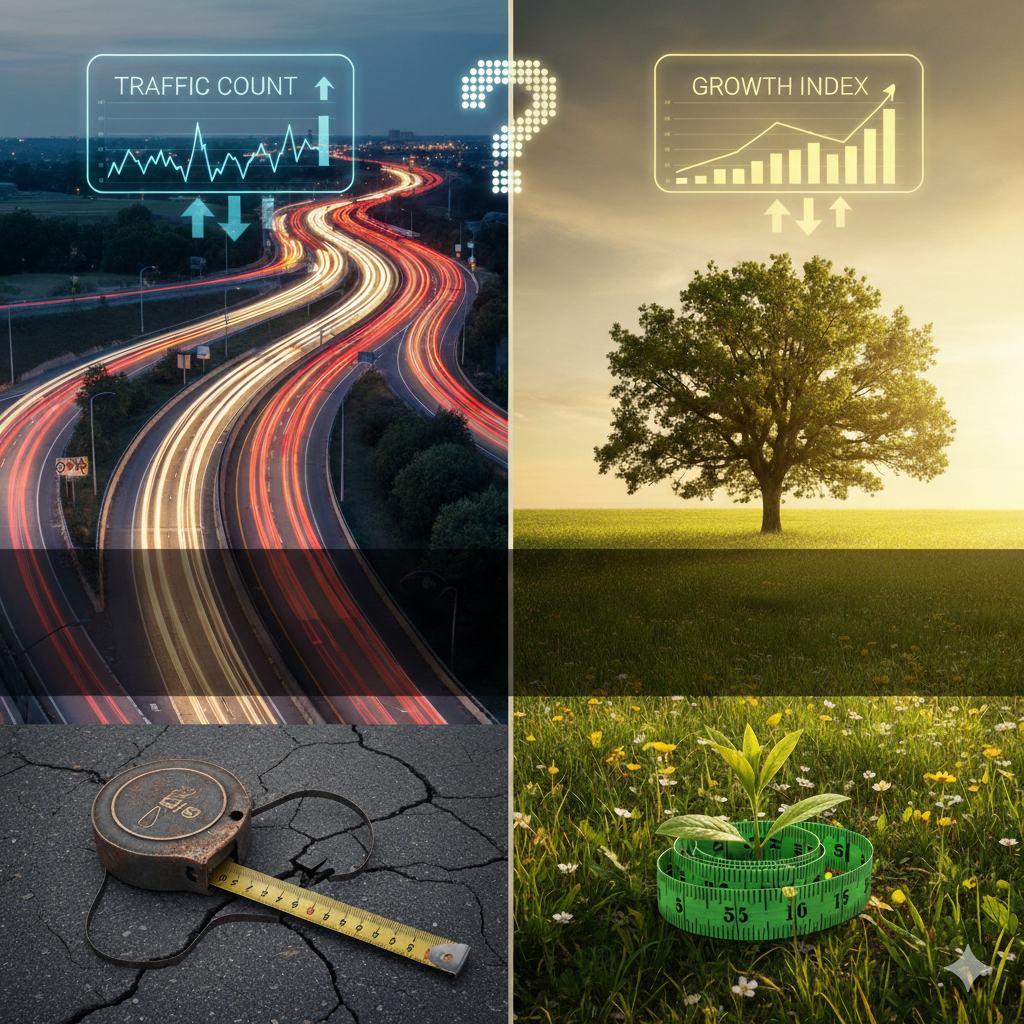
In the digital era, businesses have unprecedented access to numbers. Dashboards update in real time, analytics platforms track user behaviour down to the second, and marketing reports showcase rising graphs that suggest momentum. Among the most celebrated metrics is website traffic. When visitor numbers increase, teams feel encouraged, campaigns appear effective, and progress seems evident. However, a critical question often goes unasked: are you measuring traffic, or are you measuring growth? While traffic reflects activity, growth reflects sustainable progress in revenue, profitability, and long-term value creation. Confusing the two can lead to strategic misalignment and misplaced confidence.
Website traffic is easy to track. Analytics tools display the number of users, sessions, page views, bounce rates, and traffic sources. These metrics are visible, immediate, and often impressive. A spike in visitors after a campaign launch creates a sense of accomplishment. Yet traffic alone does not guarantee business success. Visitors who browse without converting, subscribing, or purchasing contribute little to financial performance. Measuring traffic without connecting it to outcomes risks celebrating movement without progress.
True business growth extends beyond digital engagement. It includes increased revenue, improved profit margins, higher customer lifetime value (CLV), stronger retention rates, and enhanced brand equity. Growth reflects the expansion of sustainable value rather than temporary activity spikes. While traffic can contribute to growth, it is not synonymous with it. The distinction becomes crucial when organizations allocate budgets, evaluate marketing performance, and define strategic priorities.
One of the most common misconceptions in digital marketing is equating higher traffic with greater success. This assumption overlooks the importance of conversion rates. If a website attracts 100,000 visitors but converts only 0.5 percent into paying customers, the financial impact may be modest. Conversely, a site with 20,000 visitors and a 5 percent conversion rate may generate significantly more revenue. Without analysing conversion efficiency, traffic numbers lack context.
Another limitation of traffic-focused measurement lies in ignoring audience quality. Not all visitors represent potential customers. Some may arrive through irrelevant keywords, accidental clicks, or untargeted advertising. High volumes of unqualified traffic inflate analytics reports while contributing little to meaningful outcomes. Measuring growth requires understanding whether visitors align with the target market and demonstrate purchase intent.
Marketing campaigns often prioritize top-of-funnel metrics because they are visible and quick to influence. Paid advertisements can rapidly increase impressions and clicks. Social media posts can drive engagement within hours. However, sustainable growth requires movement through the entire customer journey from awareness to consideration to purchase and retention. Focusing solely on attracting visitors without nurturing them toward conversion creates leakage in the funnel.
The relationship between traffic and revenue is not always linear. Increasing traffic may require higher advertising expenditure. If acquisition costs rise faster than revenue, profitability declines despite higher visitor numbers. Measuring growth demands analysis of Customer Acquisition Cost (CAC) alongside revenue per customer. Without balancing these metrics, organizations risk expanding traffic at the expense of financial sustainability.
Another overlooked dimension is retention. Growth is not solely about acquiring new visitors but about keeping existing customers engaged. Traffic metrics often emphasize new sessions while neglecting repeat interactions. High churn rates can offset gains from new traffic. Measuring growth requires evaluating customer retention, repeat purchase frequency, and loyalty indicators.
Data fragmentation further complicates interpretation. Traffic data typically resides in web analytics platforms, while revenue data exists in CRM or accounting systems. Without integrated data analytics, businesses struggle to connect visitor behaviour to financial results. A surge in traffic may appear positive until revenue reports reveal stagnation. Integration bridges this gap, transforming isolated metrics into cohesive insight.
Vanity metrics contribute to the confusion between traffic and growth. Metrics such as page views, social shares, and time on site create the appearance of engagement. While valuable for understanding user behaviour, they do not inherently indicate profitability. Decision-makers must distinguish between engagement indicators and revenue drivers. Growth metrics focus on bottom-line impact rather than surface-level interaction.
The influence of external factors also deserves consideration. Seasonal trends, industry events, or viral content can temporarily increase traffic without reflecting structural improvement. Businesses that mistake temporary spikes for sustained growth may overestimate performance. Long-term trend analysis provides a clearer picture of whether traffic increases translate into enduring financial gains.
Another important aspect involves segmentation. Measuring aggregate traffic obscures differences between customer groups. Growth-oriented analysis examines how specific segments contribute to revenue. For example, traffic from organic search may convert at a higher rate than traffic from display advertising. Identifying high-performing channels enables strategic investment rather than broad expansion.
The rise of performance marketing has intensified focus on measurable outcomes. Advanced attribution models connect campaigns to conversions and revenue. However, organizations that emphasize traffic volume over performance efficiency undermine these capabilities. Sustainable growth depends on optimizing both reach and return.
Strategic clarity begins with defining measurable growth objectives. Rather than setting goals such as “increase traffic by 30 percent,” businesses should aim to “increase qualified leads by 20 percent” or “improve revenue per visitor.” These objectives align digital metrics with financial performance. When traffic growth supports these goals, it becomes meaningful rather than cosmetic.
Leadership perspective also shapes measurement culture. Executives who reward traffic spikes without questioning profitability encourage superficial reporting. Conversely, leaders who prioritize revenue contribution and margin improvement promote analytical rigor. Organizational mindset determines whether traffic becomes a vanity metric or a strategic asset.
Technology offers powerful tools for bridging the gap between traffic and growth. By integrating analytics platforms with CRM systems, businesses can track revenue back to specific traffic sources. Advanced dashboards display metrics such as revenue per session, conversion value, and lifetime profitability. These indicators transform traffic data into actionable growth insights.
Another critical distinction lies in understanding intent. Traffic generated through educational content may build awareness but not immediate sales. Content marketing strategies must balance short-term conversions with long-term brand authority. Growth measurement requires evaluating both immediate revenue impact and future opportunity creation.
Scaling traffic without strengthening infrastructure can also hinder growth. If websites load slowly or checkout processes are complicated, increased traffic may amplify inefficiencies rather than profits. Measuring growth includes monitoring user experience metrics and resolving friction points that limit conversion potential.
Competitive analysis further highlights the difference between traffic and growth. A competitor may have lower website traffic yet higher profitability due to superior conversion strategies or premium positioning. Comparing traffic alone provides incomplete insight. Evaluating market share, customer value, and retention reveals deeper performance indicators.
In rapidly evolving markets, adaptability determines growth. Traffic metrics provide descriptive data about what is happening, but growth metrics guide strategic decisions about what should happen next. Organizations that analyse traffic patterns to identify optimization opportunities transform data into direction.
Ultimately, traffic is a leading indicator, not an endpoint. It signals interest and visibility, but growth requires transformation of interest into value. Businesses must continuously ask whether increased traffic translates into improved revenue, stronger relationships, and enhanced profitability.
In conclusion, measuring traffic without measuring growth creates a false sense of achievement. While visitor numbers offer insight into reach and awareness, sustainable success depends on conversion efficiency, customer retention, profitability, and long-term value creation. Organizations that integrate traffic analysis with financial metrics gain clarity and strategic advantage. The question is not whether traffic is increasing, but whether that increase contributes to meaningful growth. True progress emerges when activity aligns with outcome, and when metrics reflect not just movement, but measurable advancement in business performance.