In the era of data-driven decision-making, organizations invest heavily in analytics platforms, dashboards, machine learning models, and marketing automation systems. Leaders often expect that these tools will transform raw data into actionable insights that drive growth and efficiency. Yet despite significant investments in analytics infrastructure, many companies struggle to extract reliable value from their data. One of the most common reasons is the neglect of data governance, the foundational framework that ensures data is accurate, consistent, secure, and properly managed across the organization.
Data governance is often overlooked because it is less visible than analytics tools. Dashboards and predictive models generate excitement, while governance processes appear administrative and technical. However, analytics strategies built without governance resemble buildings constructed without structural foundations. The analytics layer may function initially, but inconsistencies, inaccuracies, and operational confusion eventually undermine its effectiveness.
At its core, data governance defines how data is collected, stored, standardized, accessed, and maintained. It establishes ownership of datasets, clarifies definitions of key metrics, and ensures that different teams interpret information consistently. Without governance, organizations frequently encounter conflicting reports, unreliable metrics, and fragmented data systems.
One common symptom of weak governance is metric inconsistency. Different departments often calculate the same performance indicators in different ways. For example, marketing may measure customer acquisition using campaign attribution models, while finance calculates new customers based on billing records. If the definitions differ, leadership receives conflicting numbers. This inconsistency erodes trust in analytics and complicates decision-making.
Another challenge arises from fragmented data sources. Modern organizations collect data from numerous systems—customer relationship management platforms, advertising networks, e-commerce platforms, analytics tools, and internal databases. Without governance standards that integrate and standardize these sources, analytics teams spend significant time cleaning and reconciling data rather than analyzing it.
Data quality is another major concern. Inaccurate or incomplete data can lead to misleading insights. Missing fields, duplicate records, inconsistent formatting, and delayed updates can distort analytical results. For instance, if customer identifiers are inconsistent across systems, lifetime value calculations may be inaccurate because transactions cannot be linked to the correct individuals.
Access control and security are also essential components of governance. As organizations collect increasingly sensitive customer and financial data, improper access management creates both operational and regulatory risks. Governance frameworks define who can view, modify, or share specific datasets. These controls help maintain compliance with privacy regulations while protecting organizational data assets.
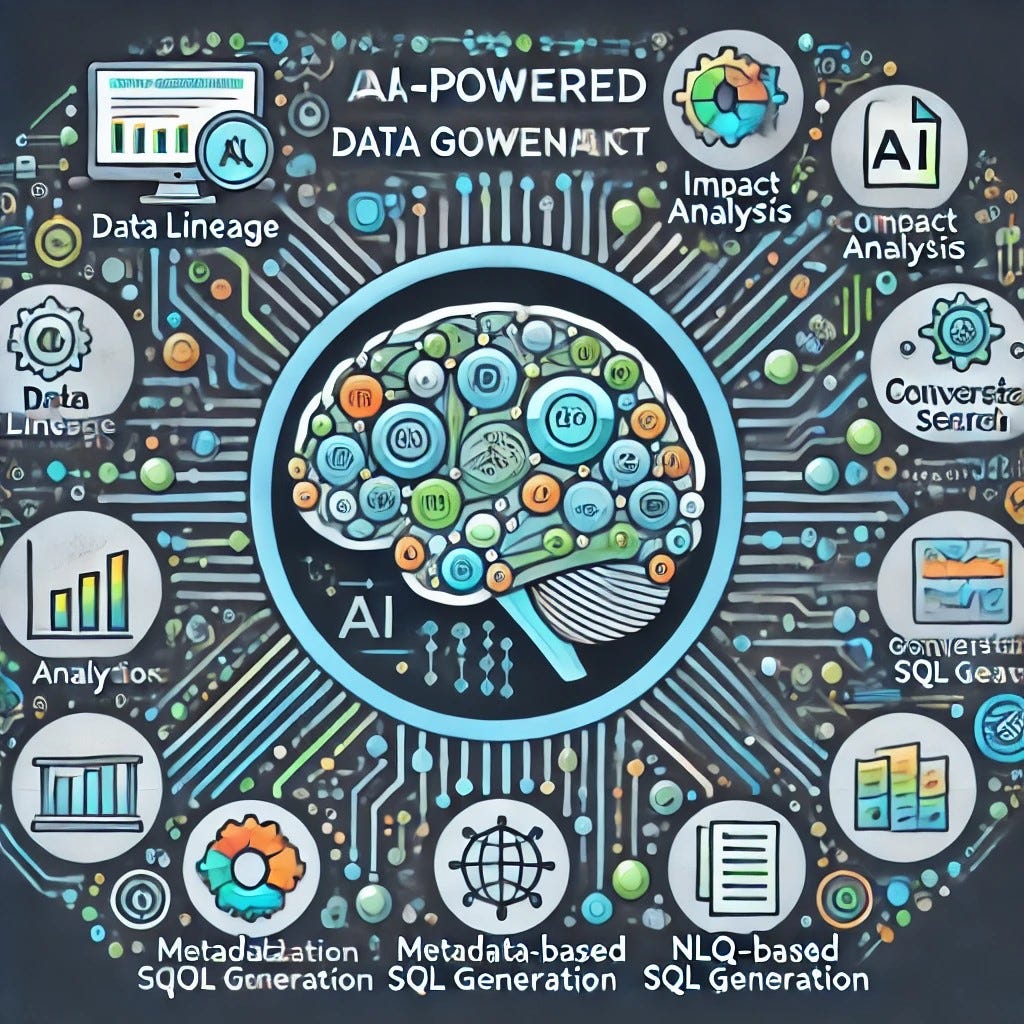
Data governance also addresses data lineage, which tracks how information moves through systems and transformations. When analysts build dashboards or predictive models, they often combine data from multiple sources. Without clear lineage documentation, it becomes difficult to trace how a metric was calculated. This lack of transparency can lead to confusion when discrepancies appear.
Another frequently overlooked element is metadata management, which documents the meaning, structure, and origin of data elements. Metadata provides context that helps analysts understand what each field represents. For example, a column labeled “revenue” may represent gross sales in one system and net revenue after discounts in another. Without clear metadata documentation, misinterpretation becomes likely.
The absence of governance also slows analytical innovation. Data scientists and analysts depend on reliable datasets to develop models and insights. If every project requires extensive data cleaning and validation, productivity declines. Establishing standardized datasets and governance protocols allows analysts to focus on generating value rather than fixing data problems.
Organizational culture plays a significant role in governance effectiveness. Data is often viewed as a technical responsibility rather than a shared organizational asset. However, governance requires collaboration across departments. Marketing, finance, operations, and technology teams must agree on definitions, data ownership, and reporting standards. Without cross-functional alignment, governance initiatives struggle to gain traction.
Leadership involvement is equally critical. Data governance initiatives require clear policies, accountability structures, and long-term commitment. When governance is treated as a side project rather than a strategic priority, implementation remains incomplete. Executive support signals that data integrity is essential for decision-making.
Technology solutions can support governance, but they cannot replace it. Tools for data cataloging, quality monitoring, and integration can automate many governance processes. However, technology must operate within clearly defined policies and organizational agreements. Governance is ultimately about decision rights and accountability, not just software.
The financial impact of weak governance can be substantial. Inaccurate reporting can lead to poor strategic decisions, inefficient marketing investments, and missed growth opportunities. When leadership loses confidence in analytics, organizations may revert to intuition-based decision-making, undermining the value of their data investments.
Conversely, strong governance creates a stable foundation for advanced analytics. When datasets are standardized, accurate, and well-documented, organizations can confidently deploy machine learning models, predictive forecasting systems, and automated decision platforms. Reliable data accelerates innovation.
Effective governance frameworks typically include several key components. Data stewardship roles assign responsibility for maintaining data quality. Standardized definitions ensure consistent interpretation of metrics. Data quality monitoring systems identify anomalies and errors. Access policies protect sensitive information while enabling collaboration.
Documentation is another essential element. Clear data dictionaries, process documentation, and lineage maps ensure that knowledge is shared rather than confined to individual analysts. This documentation improves organizational resilience when personnel changes occur.
Regular audits and quality reviews help maintain governance standards over time. Data environments evolve continuously as new tools, integrations, and processes emerge. Governance must adapt to these changes to ensure ongoing reliability.
Importantly, governance should not be perceived as a constraint on innovation. When implemented effectively, it actually accelerates analytical progress. Analysts spend less time resolving data conflicts and more time generating insights that support strategic decisions.
The growing complexity of digital ecosystems makes governance increasingly critical. Organizations that operate across multiple channels, platforms, and regions generate vast volumes of data. Without structured governance, managing this complexity becomes nearly impossible.
Ultimately, data governance represents the foundation of a successful analytics strategy. While dashboards and algorithms attract attention, their value depends entirely on the quality and reliability of the underlying data. Ignoring governance may not cause immediate problems, but over time it undermines analytical credibility.
Organizations that prioritize governance gain a decisive advantage. Reliable data enables confident decision-making, efficient resource allocation, and faster innovation. In contrast, companies that overlook governance often find that their sophisticated analytics tools produce inconsistent or misleading results.
In the long run, the effectiveness of an analytics strategy depends less on the complexity of algorithms and more on the integrity of the data that feeds them. Data governance may be the most overlooked component of analytics strategy, but it is also one of the most essential for building sustainable, data-driven organizations.