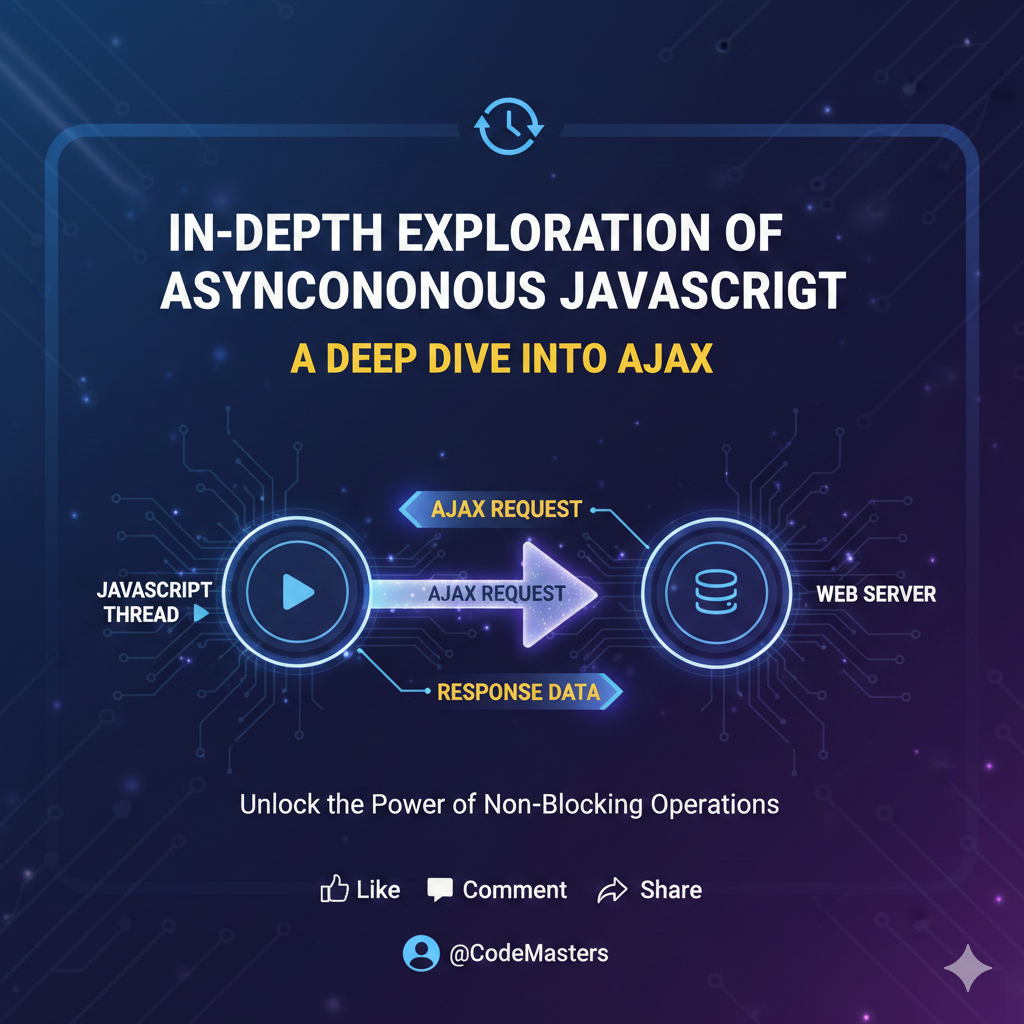
If You’Ve Ever Wondered How Modern Websites Feel So Fast And Interactive Without Constantly Refreshing The Page, The Answer Usually Comes Down To Asynchronous Javascript And Ajax. These Two Concepts Quietly Power Many Of The Experiences We Now Take For Granted—From Live Search Results To Instant Form Validation And Real-Time Content Updates.
Let’S Break It Down In A Way That Feels Practical, Human, And Actually Useful.
What Does Asynchronous Javascript Really Mean?
In Simple Terms, Asynchronous Javascript Allows Your Code To Run Tasks In The Background While The Rest Of The Page Continues To Work Normally. Traditional (Synchronous) Javascript Executes One Task At A Time. If One Task Takes Longer—Like Fetching Data From A Server—The Entire Page Can Feel Stuck.
With Asynchronous Programming, Javascript Says: “Hey, I’Ll Ask The Server For Data, But I Won’T Wait Around Doing Nothing. I’Ll Keep The Page Responsive And Handle The Result When It Arrives.”
This Approach Dramatically Improves User Experience, Especially In Data-Driven Web Applications.
Understanding Ajax: The Backbone Of Async Web Requests
Ajax Stands For Asynchronous Javascript And Xml, Though Today It Mostly Works With Json Instead Of Xml. Ajax Allows Web Applications To Send And Receive Data From A Server Without Reloading The Entire Page.
In Practice, This Means:
- Submitting A Form Without A Page Refresh
- Loading New Content While Scrolling
- Updating Parts Of A Dashboard In Real Time
Ajax Bridges The Gap Between The Frontend And Backend, Making Websites Feel More Like Applications Than Static Pages.
How Ajax Works Behind The Scenes
At A High Level, An Ajax Request Follows These Steps:
- A User Triggers An Action (Click, Scroll, Input, Etc.)
- Javascript Sends A Request To The Server In The Background
- The Server Processes The Request And Sends Back Data
- Javascript Updates The Ui Dynamically Without Refreshing The Page
This Seamless Flow Is What Makes Dynamic Web Applications Feel Smooth And Responsive.
Modern Ways To Handle Asynchronous Javascript
Over Time, Javascript Has Evolved To Make Async Code Cleaner And Easier To Manage.
1. Callbacks
Callbacks Were The Original Approach, But They Often Led To Messy, Hard-To-Read Code—Commonly Known As “Callback Hell.”
2. Promises
Promises Introduced A More Structured Way To Handle Async Operations. They Represent A Value That Will Be Available Now, Later, Or Never. This Made Code More Readable And Easier To Debug.
3. Async/Await
Today, Async/Await Is The Preferred Approach. It Lets You Write Asynchronous Code That Looks And Feels Synchronous, Making Logic Easier To Follow And Maintain.
For Developers, This Means Fewer Bugs And Cleaner Codebases.
Why Ajax Still Matters In Modern Development
With The Rise Of Frameworks Like React, Vue, And Angular, You Might Think Ajax Is Outdated. In Reality, These Frameworks Rely Heavily On Ajax Concepts Under The Hood.
Ajax Is Still Essential For:
- Api Integration
- Fetching Data From Third-Party Services
- Improving Page Load Performance
- Building Scalable Single-Page Applications
Understanding Ajax Gives You A Stronger Foundation, No Matter Which Frontend Framework You Use.
Seo And Performance Considerations
When Used Correctly, Asynchronous Javascript And Ajax Can Improve Performance—But Misuse Can Hurt Seo. Search Engines Need To Properly Crawl And Index Your Content.
Best Practices Include:
- Server-Side Rendering Or Pre-Rendering Important Content
- Avoiding Critical Content That Loads Only After User Interaction
- Optimizing Api Response Times
Balancing Performance Optimization With Search Visibility Is Key To Long-Term Success.
Final Thoughts
Mastering Asynchronous Javascript And Ajax Isn’T Just About Writing Better Code—It’S About Creating Better Experiences. When Users Don’T Have To Wait, Refresh, Or Struggle With Clunky Interfaces, They Stay Longer And Engage More.
Whether You’Re Building A Simple Website Or A Complex Web Application, A Solid Understanding Of Ajax And Async Behavior Will Level Up Both Your Development Skills And The Quality Of Your Projects. In Today’S Fast-Paced Web, Responsiveness Isn’T Optional—It’S Expected.