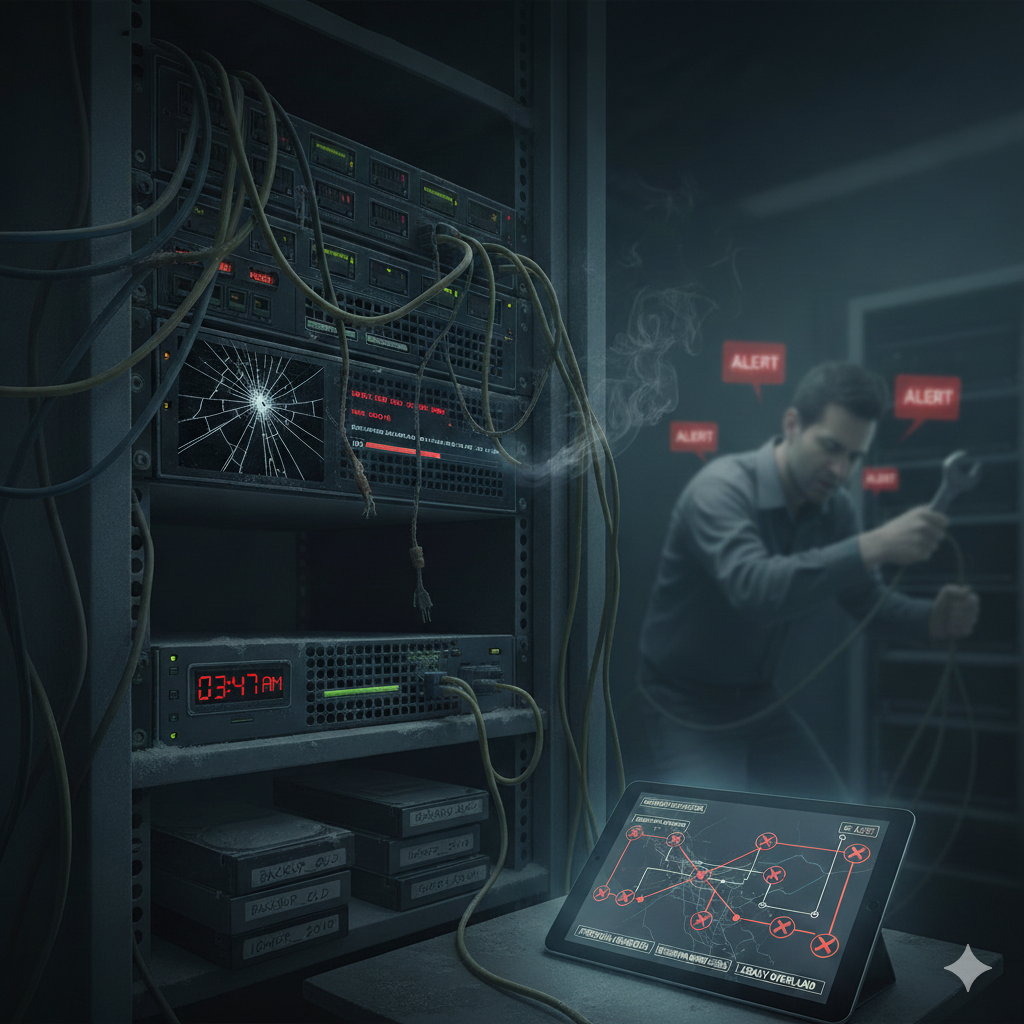
Most IT failures don’t arrive with alarms, crashes, or dramatic shutdowns.
They creep in quietly—through slow systems, recurring workarounds, rising costs, and frustrated teams. By the time leadership notices something is wrong, productivity has already dropped, customers are affected, and fixing the problem becomes expensive.
Many organizations believe their IT infrastructure is “good enough” because things are still running. But running does not mean healthy.
1. Systems Are Working, But Everything Feels Slow
One of the earliest and most overlooked signs of IT failure is persistent slowness.
Applications open late, files take longer to load, systems lag during peak hours, and employees constantly complain that “the system is slow today.”
This often gets dismissed as:
- Internet issues
- Heavy workloads
- Temporary glitches
In reality, consistent slowness usually points to deeper infrastructure problems such as:
- Overloaded servers
- Outdated hardware
- Poor network design
- Applications that have outgrown their original setup
When systems slow down, productivity drops silently. Employees take longer to complete tasks, multitasking becomes harder, and small delays compound into hours of lost work every week.
What’s worse is that teams start adjusting their behavior—avoiding certain tools, delaying tasks, or working outside official systems—creating operational risk and data inconsistency.
Slowness isn’t a comfort issue. It’s a performance warning.
2. IT Issues Are “Normal” in Daily Operations
If frequent IT problems have become part of daily routine, your infrastructure is already under stress.
Common examples include:
- Applications freezing or crashing occasionally
- Regular login or access issues
- Printers, VPNs, or internal tools failing randomly
- Systems that require frequent restarts
When teams say things like “This happens sometimes” or “Just refresh and try again”, it’s a red flag.
Normalizing small failures leads to:
- Lower employee confidence in systems
- Increased dependency on manual workarounds
- Higher support workload for IT teams
- Gradual erosion of system reliability
Over time, businesses stop expecting stability—and that’s dangerous. IT should be a dependable foundation, not an unpredictable variable.
Quiet failures don’t stop operations immediately, but they slowly reduce efficiency, trust, and scalability.
3. Security Measures Haven’t Changed in Years
Cyber threats evolve constantly, but many IT infrastructures remain frozen in time.
If your organization:
- Uses the same security tools for years
- Relies only on basic antivirus software
- Has no recent security audits or penetration testing
- Has unclear access controls or outdated user permissions
Outdated security doesn’t always lead to immediate breaches. Instead, it creates invisible vulnerabilities—weak points attackers can exploit quietly over time.
Signs of failing security infrastructure include:
- No centralized monitoring of threats
- Lack of multi-factor authentication
- Delayed or inconsistent software updates
- Employees unaware of basic security practices
Security failures are often discovered after damage is done—data leaks, compliance violations, or operational shutdowns. A quiet security weakness is more dangerous than an obvious one, because it gives a false sense of safety.
4. IT Costs Keep Rising Without Clear Value
Another silent indicator of infrastructure failure is unexplained cost growth.
You may notice:
- Increasing cloud or licensing bills
- Higher spending on maintenance and repairs
- Paying for tools that are rarely used
- Emergency fixes costing more than planned upgrades
When IT spending rises but system performance, security, and reliability don’t improve, the problem isn’t cost—it’s inefficiency.
This usually happens due to:
- Legacy systems requiring constant patching
- Poor visibility into infrastructure usage
- Redundant or overlapping software tools
- Short-term fixes replacing long-term planning
Instead of investing strategically, businesses end up reacting—spending money just to keep things running. A healthy IT infrastructure aligns cost with value. A failing one quietly drains budgets without delivering growth, resilience, or innovation.
5. Your Infrastructure Can’t Scale With the Business
Growth exposes infrastructure weaknesses faster than anything else.
If your business struggles when:
- New users or teams are added
- Workloads increase during peak periods
- New applications are introduced
- Remote or hybrid work expands
…it means your IT foundation wasn’t designed to scale.
Non-scalable infrastructure leads to:
- Frequent performance bottlenecks
- Delays in launching new services
- Increased downtime during upgrades
- Frustration across departments
Instead of enabling growth, IT becomes a limitation. Many organizations don’t notice this failure early because growth happens gradually. But over time, the gap between business needs and IT capability widens—forcing rushed upgrades, costly migrations, or operational compromises. Scalability issues don’t break systems overnight. They quietly restrict ambition.
6. IT Knowledge Lives in People, Not Systems
A subtle but critical sign of infrastructure failure is knowledge dependency.
If your operations rely heavily on:
- One or two key IT personnel
- Unwritten processes and undocumented configurations
- Tribal knowledge instead of standardized systems
…your infrastructure is fragile.
When documentation is missing:
- Troubleshooting takes longer
- Onboarding new staff becomes difficult
- Mistakes increase during changes or upgrades
- Business continuity is at risk if key people leave
This kind of failure stays hidden until an incident occurs—an outage, resignation, or urgent change that no one fully understands. Strong IT infrastructure is not just about technology. It’s about clarity, documentation, and repeatable processes that protect the business from internal dependency risks.
Final Thoughts: Quiet IT Failures Are the Most Expensive
Loud failures demand attention.
Quiet failures drain value slowly, day by day.
When systems are slow, issues are normalized, security stagnates, costs rise, scalability suffers, and knowledge stays undocumented, your IT infrastructure is no longer supporting the business—it’s holding it back.
The most successful organizations don’t wait for breakdowns. They identify early signals, invest proactively, and treat IT as a strategic asset rather than a background utility.
If your infrastructure feels “fine” but never truly reliable, efficient, or future-ready—it may already be failing quietly.
And the cost of waiting is always higher than the cost of fixing it early.