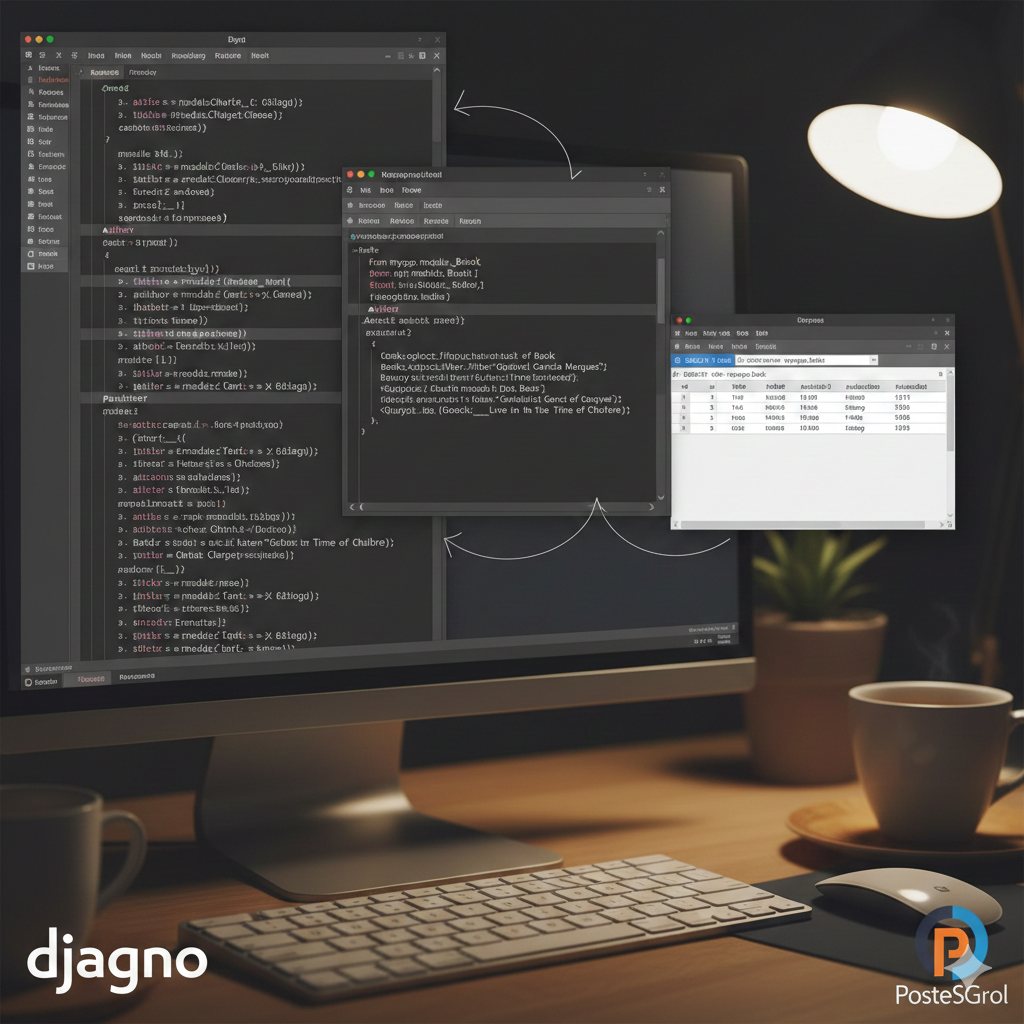
If You’Ve Ever Worked With Databases Directly Using Raw Sql, You Know The Feeling—Queries Getting Messy, Code Becoming Hard To Read, And Small Changes Turning Into Big Headaches. This Is Exactly Where Orm In Django Quietly Becomes Your Best Friend.Orm Stands For Object Relational Mapping.
In Simple Words, Django Orm Lets You Interact With Your Database Using Python Code Instead Of Sql Queries.
You Don’T Write:
Sql
Select * From Users Where Id = 1;
Instead, You Write:
Python
User.Objects.Get(Id=1)
Same Result. Much Cleaner. Much Safer.
That’S The Magic Of Django Orm—It Acts As A Bridge Between Your Python Models And Your Database Tables.
Before Orm, Developers Had To:
- Write Raw Sql
- Handle Database Connections Manually
- Worry About Sql Injection
- Rewrite Queries When Switching Databases
With Orm In Django, All Of This Pain Is Handled For You.
Here’S What You Gain:
- Readable Code (Looks Like Python, Not Sql)
- Database Independence (Postgresql, Mysql, Sqlite, Oracle)
- Built-In Security Against Sql Injection
- Faster Development With Fewer Bugs
Honestly, Once You Use Django Orm Properly, It’S Hard To Go Back.
How Django Orm Actually Works (Behind The Scenes)
At The Core Of Django Orm Are Models.
A Django Model Is A Python Class That Represents A Database Table.
Example:
Python
Class Blog(Models.Model)
   Title = Models.Charfield(Max_Length=200)
    Content = Models.Textfield()
    Created_At = Models.Datetimefield(Auto_Now_Add=True)
What Happens Here?
Blog→ Database TableTitle,Content,Created_At→ Table Columns- Each Row → One Python Object
Django Orm Automatically:
- Creates The Table
- Maps Fields To Columns
- Converts Database Rows Into Python Objects
You Just Focus On Logic. Django Handles The Rest.
Common Orm Operations In Django (Real-Life Usage)
1. Creating Data
Python
Blog.Objects.Create(
    Title="My First Blog",
    Content="Written Using Django Orm"
)
No Insert Queries. No Syntax Stress.
2. Reading Data
Python
Blogs = Blog.Objects.All()
Or Filter Data:
Python
Blog.Objects.Filter(Title__Icontains="Django")
This Is Where Django Orm Queries Shine—Clean And Expressive.
3. Updating Data
Python
Blog = Blog.Objects.Get(Id=1)
Blog.Title = "Updated Title"
Blog.Save()
4. Deleting Data
Python
Blog.Delete()
Simple, Readable, And Safe.
Relationships Made Easy With Django Orm
Databases Are All About Relationships—And Django Orm Handles Them Beautifully.
One-To-Many (Foreignkey)
Python
Class Comment(Models.Model):
    Blog = Models.Foreignkey(Blog, On_Delete=Models.Cascade)
Many-To-Many
Python
Class Tag(Models.Model):
    Blogs = Models.Manytomanyfield(Blog)
Django Orm Automatically Creates Joins And Relationships—No Complex Sql Required.
Django Orm Vs Raw Sql (Honest Comparison)
| Feature | Django Orm | Raw Sql |
|--------|------------|---------|
| Readability | ⭐⭐⭐⭐⭐ | ⭐⭐ |
| Security | Built-In | Manual |
| Speed Of Development | Fast | Slower |
| Database Switching | Easy | Painful |
| Complex Queries | Good | Excellent |
👉 Truth: Django Orm Covers 90% Of Use Cases Perfectly. For The Remaining 10% (Very Complex Queries), Django Still Allows Raw Sql When Needed.
So You’Re Never Locked In.
Performance: Is Django Orm Slow?
This Is A Common Myth.
Django Orm Is Not Slow By Default. Badly Written Queries Are Slow—Orm Or Not.
Django Gives You Tools Like:
Select_Related()Prefetch_Related()- Querysets (Lazy Loading)
When Used Correctly, Orm In Django Performs Extremely Well—Even For Large-Scale Applications.
Why Django Orm Is Perfect For Businesses & Startups
From A Business Perspective, Django Orm Means:
- Faster Development Cycles
- Easier Maintenance
- Cleaner Codebase
- Lower Long-Term Cost
That’S Why Django Powers Platforms Like Instagram (Yes, Really).
Final Thoughts (From Developer To Developer)
The Django Orm Isn’T Just A Feature—It’S One Of The Main Reasons Django Feels So Productive.
It Lets You:
- Think In Python Objects
- Avoid Repetitive Sql
- Focus On Solving Real Problems
If You’Re Learning Django, Mastering Orm In Django Framework Is Non-Negotiable. Once It Clicks, Everything Else Becomes Easier.
And Trust Me—After A Few Real Projects, You’Ll Wonder How You Ever Lived Without It.