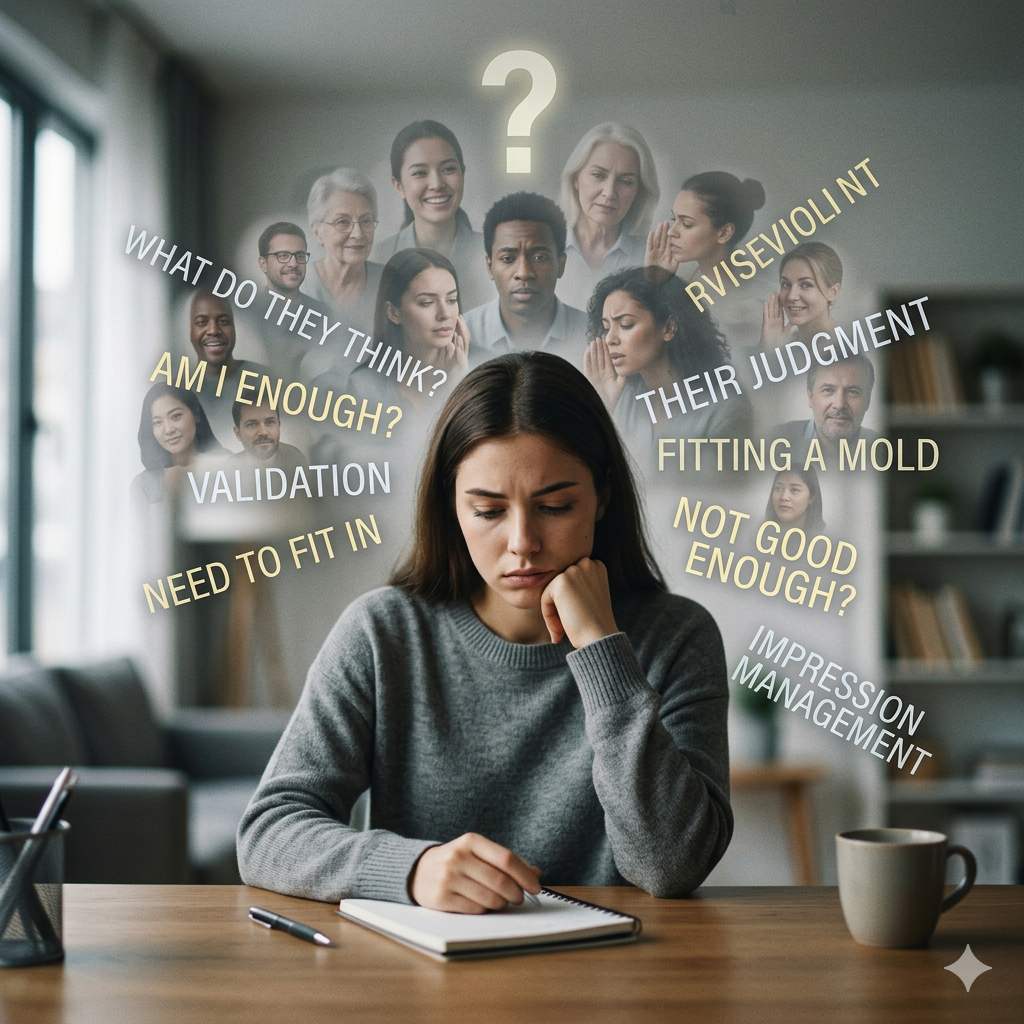
Human beings often care deeply about how they are perceived by others. Whether it involves appearance, opinions, achievements, or behavior, people frequently evaluate themselves through the imagined judgments of those around them. Even individuals who claim to be independent of social influence may still feel subtle pressure when they believe others are observing or evaluating them. Understanding why people care about what others think requires examining the psychological, social, and evolutionary forces that shape human behavior.
At a fundamental level, humans are social beings. For most of human history, survival depended on cooperation within groups. Early communities relied on trust, collaboration, and mutual support for activities such as hunting, gathering, and protection from threats. Being accepted by the group significantly increased the chances of survival, while rejection could lead to isolation and vulnerability. Because of this historical reality, the human brain developed systems that monitor social approval and respond strongly to signs of acceptance or rejection.
This evolutionary background helps explain why social approval often feels rewarding. When individuals receive positive recognition, encouragement, or praise, the brain releases chemicals associated with pleasure and motivation. These responses reinforce behaviors that strengthen social bonds. Conversely, criticism or rejection can trigger emotional discomfort because the brain interprets these signals as potential threats to belonging.
Another important factor is the role of social identity. People define themselves partly through their relationships with others. Family, friends, colleagues, and communities contribute to a person’s sense of identity and belonging. Because identity is closely tied to social connections, individuals often pay attention to how their actions affect the perceptions of those around them. Approval from important social groups can strengthen a person’s sense of identity, while negative judgment may create uncertainty about one’s place within the group.
The human mind is also highly sensitive to reputation. Reputation acts as a form of social currency that influences opportunities, trust, and cooperation. In professional environments, for example, a strong reputation for reliability or competence can open doors to new opportunities. Similarly, in personal relationships, trust and respect are shaped by how others perceive an individual’s behavior. Because reputation can influence future outcomes, people naturally become attentive to how their actions are interpreted by others.
Another reason individuals care about social perception is the presence of self-evaluation through comparison. People often assess their abilities, achievements, and choices by comparing themselves to others. This process helps individuals understand their relative position within a group or community. While social comparison can motivate improvement and learning, it can also create pressure to meet perceived expectations.
Emotional sensitivity to others’ opinions is also influenced by self-esteem. Individuals with higher levels of confidence may feel less affected by occasional criticism, while those with lower self-confidence may be more sensitive to perceived judgment. However, even confident individuals remain aware of social feedback because it provides information about how their actions are understood within their environment.
Cultural influences can further shape the importance of others’ opinions. In many societies, values such as respect, harmony, and community responsibility encourage individuals to consider the perspectives of those around them. In such environments, caring about social perception is often viewed as a sign of maturity and social awareness rather than weakness.
Modern communication environments have amplified this tendency. With social media and constant digital interaction, individuals receive frequent feedback through comments, likes, and public responses. These systems often highlight social approval in visible ways, making people more conscious of how their actions are perceived by wider audiences.
Despite these influences, caring about others’ opinions is not always negative. Awareness of social expectations can encourage empathy, cooperation, and responsible behavior. When individuals consider how their actions affect others, they may be more likely to act with fairness and respect.
However, excessive concern about social judgment can sometimes create unnecessary stress. When individuals become overly focused on approval, they may hesitate to express authentic ideas or pursue meaningful opportunities. In these cases, the desire for acceptance can limit creativity and personal growth.
Balancing awareness of others’ perspectives with personal values is therefore important. One helpful approach involves distinguishing between constructive feedback and superficial judgment. Constructive feedback provides useful insights that support learning and improvement, while superficial judgment often reflects temporary opinions or misunderstandings.
Another helpful strategy is developing self-awareness. When individuals understand their goals, values, and priorities, they can evaluate external opinions more thoughtfully. Rather than reacting automatically to criticism or praise, they can decide which perspectives deserve attention and which can be safely ignored.
Healthy social awareness also involves recognizing that others are often focused on their own concerns. People may assume they are constantly being evaluated, but in reality most individuals are primarily thinking about their own experiences and challenges.
Ultimately, people care about what others think because the human brain evolved within social environments where belonging, reputation, and cooperation played critical roles. Social feedback helps individuals navigate relationships, build trust, and maintain community connections.
At the same time, personal growth often requires balancing social awareness with independent thinking. By understanding the psychological roots of social sensitivity, individuals can develop a more balanced perspective—one that values meaningful feedback while preserving authenticity and personal judgment.
Recognizing why people care about what others think allows individuals to approach social influence more consciously. Instead of being controlled by every opinion or expectation, they can choose when to listen, when to reflect, and when to remain confident in their own decisions.