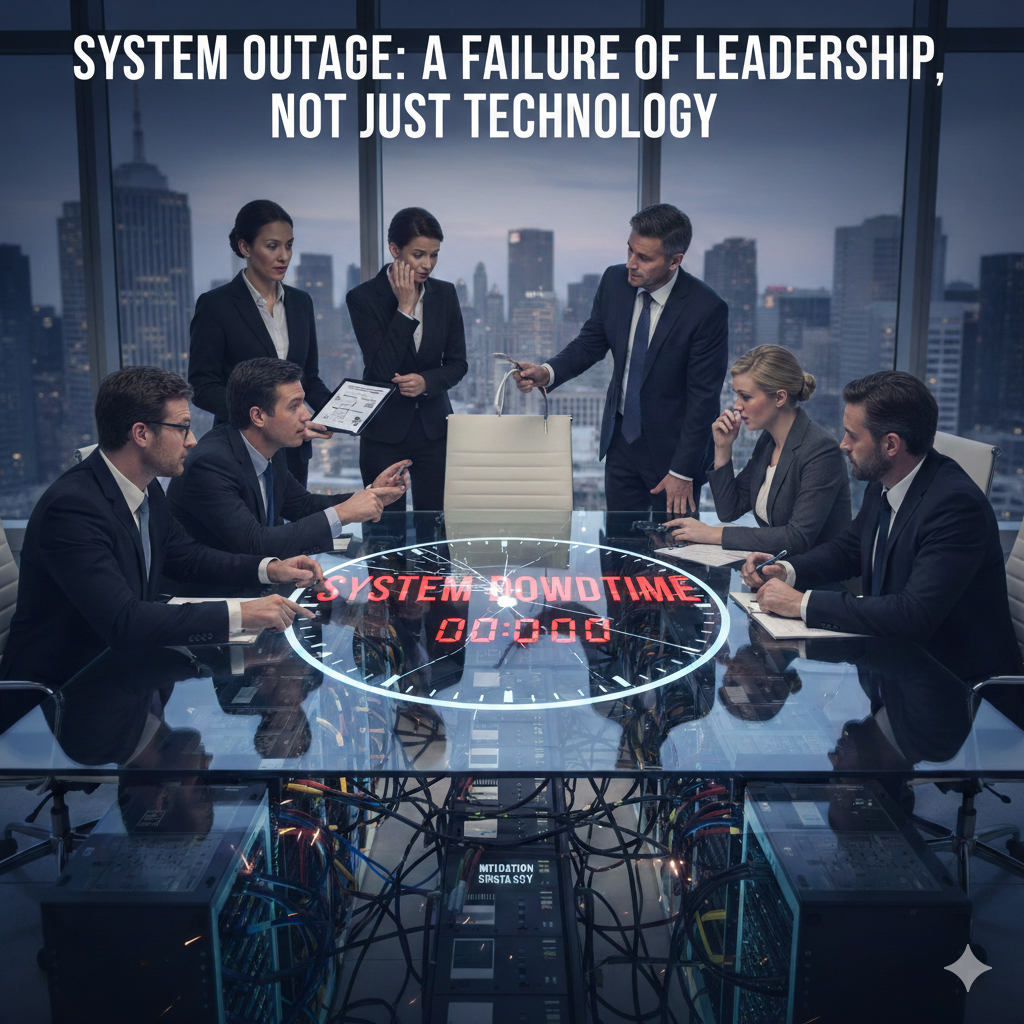
System downtime is often viewed as a purely technical failure a server crash, a cloud outage, a failed update, or a cybersecurity incident inside the enterprise IT infrastructure. When systems go offline, attention immediately turns to the IT department. Engineers are called, vendors are contacted, and troubleshooting begins inside the enterprise technology stack. However, reducing downtime to a technical malfunction oversimplifies the issue. In reality, system downtime reflects deeper decisions about governance, investment, risk tolerance, and strategic alignment within the broader business technology ecosystem.
Downtime is not just a systems problem. It is a leadership responsibility.
Modern organizations rely on digital platforms for operations, communication, financial reporting, customer engagement, and strategic planning. The enterprise application environment supports everything from payroll processing to supply chain coordination. When downtime occurs, the impact extends far beyond servers and software. Revenue pauses, employees lose productivity, customer trust declines, and brand reputation weakens. These consequences originate in executive-level priorities budget allocation, infrastructure planning, risk oversight, and cultural attitudes toward technology inside the enterprise governance framework.
Downtime Reflects Strategic Investment Decisions
System reliability is directly tied to how leadership prioritizes infrastructure investment. If modernization within the enterprise infrastructure lifecycle is consistently deferred to reduce short-term spending, systems age. Hardware operates beyond recommended lifespans. Software updates are postponed. Redundancy measures inside the enterprise architecture strategy are labelled as optional rather than essential. When downtime eventually occurs, it is rarely unexpected. It is often the predictable outcome of delayed upgrades and insufficient resilience planning within the enterprise IT budgeting strategy. Leadership decisions determine whether the organization invests in backup systems, failover environments, and disaster recovery capabilities within the digital operations framework. Downtime is therefore a reflection of strategic choices, not merely technical misfortune.
Risk Management Is an Executive Function
Every organization operates within a defined risk tolerance. Some leaders accept minimal redundancy to reduce cost, while others prioritize maximum uptime within the enterprise risk management model. Decisions about infrastructure resilience, cybersecurity investment, and cloud architecture are risk decisions and risk management is an executive responsibility. Failure to implement strong controls inside the enterprise cybersecurity architecture exposes systems to avoidable outages caused by cyberattacks or ransomware. Similarly, neglecting structured testing within the enterprise disaster recovery framework increases recovery time during disruptions. These are governance decisions embedded in leadership priorities. Downtime often reveals the gap between perceived and actual risk posture within the digital risk management strategy. When resilience planning is underfunded or deprioritized, outages become more likely and more damaging.
Downtime Impacts Revenue and Reputation
System availability is directly tied to financial performance. E-commerce platforms, billing systems, CRM tools, and operational dashboards all depend on stable infrastructure inside the enterprise technology ecosystem. When systems fail, revenue-generating activities halt. Transactions cannot process. Orders cannot be fulfilled. Customer inquiries go unanswered. Beyond immediate financial loss, downtime damages brand perception. Customers expect reliability from organizations operating within a digitally driven marketplace. Repeated disruptions signal instability within the enterprise service delivery framework. Reputation recovery often takes longer than system restoration. These financial and reputational risks extend beyond IT performance metrics. They affect board-level reporting, shareholder confidence, and long-term growth within the enterprise financial governance strategy. Therefore, uptime must be considered a strategic performance indicator, not just a technical statistic.
Culture Determines Preparedness
Organizational culture influences how downtime risks are addressed. In some companies, technology is treated as a cost center rather than a strategic enabler within the business technology strategy. Preventative maintenance, infrastructure audits, and resilience testing may be postponed because systems “seem stable.” A culture that values proactive governance inside the enterprise IT operations model invests in monitoring tools, automated alerts, and performance analytics. It encourages scenario planning and continuous improvement within the digital transformation roadmap. Conversely, reactive cultures address problems only after failure occurs. Leadership sets the tone. If executives prioritize resilience, cross-functional planning strengthens continuity within the enterprise business continuity framework. If uptime is considered solely an IT concern, preparation weakens.
Cross-Department Dependency
Modern enterprises operate through interconnected platforms. Finance depends on ERP systems. Sales relies on CRM applications. Operations require inventory management tools. HR uses payroll software. All of these functions integrate within the enterprise application ecosystem. When downtime occurs, disruption spreads across departments. This interconnectedness means availability planning cannot remain isolated within IT. Business leaders must collaborate on redundancy, communication protocols, and contingency workflows inside the enterprise architecture alignment process. Downtime planning requires cross-department ownership because operational continuity affects the entire enterprise growth framework. Leadership coordination ensures response plans align with strategic priorities.
Communication During Downtime
Technical teams focus on restoration, but leadership manages communication. Clear messaging to employees, customers, vendors, and stakeholders shapes perception during outages within the enterprise service management environment. Transparent communication reduces uncertainty and protects trust. Poor communication magnifies disruption. Without executive oversight inside the enterprise crisis management framework, misinformation spreads. Customers may assume data compromise even when none occurred. Employees may create workarounds that introduce compliance risk. Effective downtime management combines technical recovery with leadership-driven communication strategy embedded within the enterprise governance model.
Innovation and Resilience Are Linked
Organizations investing in scalable cloud computing infrastructure and automated monitoring systems within the enterprise digital innovation framework typically experience shorter outages and faster recovery times. These investments stem from leadership vision, not technical improvisation. Resilience requires structured modernization inside the enterprise infrastructure lifecycle management process. Redundant environments, load balancing, and geographically distributed backups demand long-term planning. Innovation budgets often determine whether such capabilities are implemented proactively. Downtime severity frequently correlates with how forward-thinking leadership has been about infrastructure evolution inside the enterprise IT landscape.
Accountability Beyond IT
When downtime occurs, blame often targets technical teams. However, engineers operate within constraints defined by leadership budget limitations, staffing levels, and strategic directives within the enterprise IT management structure. If preventive maintenance resources are insufficient, vulnerability increases. Accountability should extend to governance decisions. Leadership defines whether the organization operates with minimal redundancy or enterprise grade resilience within the enterprise technology governance framework. Recognizing this shared responsibility strengthens organizational maturity.
Measuring Downtime as a Strategic Metric
Uptime percentage should not exist solely as a technical KPI. It should be integrated into executive dashboards within the enterprise business intelligence framework. Monitoring downtime frequency, duration, financial impact, and root causes enables strategic oversight. Leadership review of outage metrics inside the enterprise performance management system encourages proactive investment. When downtime becomes part of executive reporting, it reinforces the understanding that availability is a strategic outcome.
Building Leadership-Driven Resilience
Reducing downtime requires deliberate leadership action. Structured risk assessments inside the enterprise risk governance model, infrastructure audits within the enterprise architecture framework, and investment planning through the enterprise technology lifecycle strategy build long-term resilience. Establishing clear disaster recovery objectives, including Recovery Time Objectives (RTO) and Recovery Point Objectives (RPO), strengthens preparedness within the enterprise business continuity strategy. Leadership must ensure these objectives align with operational realities. Technology resilience is not achieved through isolated fixes. It is built through governance, collaboration, and strategic funding decisions embedded in the broader business technology ecosystem.
Conclusion
System downtime is rarely just a technical glitch. It reflects investment choices, risk tolerance, cultural priorities, and governance alignment within the enterprise IT infrastructure. While IT teams execute recovery, leadership defines preparedness. Organizations that treat uptime as a strategic imperative supported by structured planning, cross-functional coordination, and sustained modernization inside the enterprise technology framework reduce disruption and protect long-term growth. In a digitally dependent world, resilience begins in the boardroom. Downtime is not merely an operational inconvenience. It is a leadership issue that reveals how seriously an organization takes its responsibility to protect continuity, reputation, and strategic momentum within the evolving enterprise growth strategy.